Your cabinet doors do more than open and close. They set the entire mood of your kitchen. Get them right, and everything else falls into place. Get them wrong, and even expensive countertops won’t save the look.

Most homeowners don’t realize how many panel door styles are out there. It’s not just raised or flat. There are beadboard options, glass inserts, arch tops, and more. Each one tells a different visual story.
If you’re working with a contractor or showroom on custom kitchen cabinets, door style is usually the first real design decision you’ll make. It shapes everything hardware, finish, color, and even your lighting choices.
Columbus kitchens vary a lot from older Craftsman bungalows on the near east side to newer builds in Dublin and Westerville. The right door style should fit your home’s bones, not fight them.
This guide is organized by style, then by fit. Read through the full thing, or jump to the style that caught your eye first. Either way, you’ll leave with a clear sense of direction.
What Is a Panel Door? A Quick Overview
A. Definition and Basic Construction
A panel door has two main parts: a frame and a center panel. The frame is made up of vertical pieces called stiles and horizontal pieces called rails. The panel sits inside that frame.
What changes between styles is how that panel is positioned. It can sit higher than the frame (raised), lower than the frame (recessed), or perfectly flat (flush). That single variable creates dramatically different looks.
Panel doors have dominated kitchen design for generations. They work in almost every home style. That’s why they’re still the default choice for most kitchen remodels.
B. Panel Doors vs. Slab Doors
A slab door is exactly what it sounds like: one flat piece, no frame, no panel. It’s the go-to for ultra-modern, minimalist kitchens. Clean lines, no visual noise.
Panel doors have more depth and character. They catch light differently throughout the day. They can feel traditional, transitional, or even modern depending on the profile.
Choosing between them comes down to your kitchen’s aesthetic. If you want your cabinets to blend into the background, slab might be your answer. If you want them to be part of the design story, panel doors deliver that.
The Main Panel Door Styles Explained
A. Raised Panel Doors
A raised panel door has a center section that sits higher than the surrounding frame. It’s the most traditional cabinet door style in American kitchen design. You’ll find it in colonial homes, craftsman bungalows, and classic European-inspired kitchens.
The profile creates real visual depth. Light hits the edges and casts subtle shadows. That dimension is part of the appeal it makes doors feel substantial and crafted.
Common wood choices include oak, cherry, maple, and alder. Each wood takes stain differently. Oak has a strong grain pattern that shows beautifully. Cherry develops a rich patina over time.
Pair raised panel doors with detailed hardware oil-rubbed bronze, antique nickel, or cup pulls in brushed brass. Ornate hardware complements the traditional profile without competing with it.
Design tip: Raised panel doors can feel heavy in a small kitchen. If your space is under 150 square feet, consider using them on lower cabinets only and pairing with simpler upper doors.
B. Recessed Panel Doors
A recessed panel door is the flip side of the raised version. The center panel sits slightly inset below the frame. The result is clean, structured, and surprisingly versatile.
The Shaker style door is the most famous version of this design. It was developed by the Shaker religious community in the 18th century. Their philosophy was simple: make things well, make them honest, make them last. The door reflects that perfectly.
Today, the Shaker door is America’s most popular cabinet door style by a wide margin. It works in traditional kitchens and modern ones. It’s genuinely hard to go wrong with it.
True Shaker vs. Shaker-inspired: A true Shaker door is solid wood with tight joinery. Shaker-inspired versions use MDF or thermofoil at lower price points. Both look similar from a distance, but the quality difference is real over time.
Homeowners searching for kitchen shaker style cabinets will find no shortage of options in the Columbus market. From stock to fully custom, this style is available at every price point. That accessibility is a big reason it stays the top choice year after year.
Best kitchen fits for recessed panel doors: Modern Farmhouse, Transitional, Contemporary, and Scandinavian. In Columbus, OH, this style is especially popular in older homes being updated without losing their original character.
C. Flat Panel Doors
A flat panel door has no raised or recessed profile. The entire door surface is smooth and flush. It reads as clean, architectural, and decidedly modern.
This is the door style you see in European-inspired kitchens and high-end contemporary builds. It pairs naturally with handleless hardware, integrated pulls, and sleek quartz countertops.
Flat panel doors are also the easiest to clean. No grooves to trap grease. No shadow lines to show fingerprints. If low-maintenance is a priority for your household, this is worth considering.
Best fits: Ultra-Modern, Mid-Century Modern, and Minimalist kitchens.
D. Beadboard Panel Doors
Beadboard replaces the flat center panel with a series of vertical grooved planks. The texture adds visual interest without heavy ornamentation. It reads warm, casual, and inviting.
This style is a natural fit for Cottage, Coastal, Country, and Farmhouse kitchens. It adds charm without screaming “country kitchen” if used thoughtfully.
One popular approach: use beadboard doors on the island only. Upper and lower perimeter cabinets stay in a simpler Shaker style. The contrast creates a focal point without overwhelming the space.
E. Glass Panel Doors
Glass panel doors swap the solid center panel for glass clear, frosted, seeded, or leaded. They’re functional and decorative at the same time.
Clear glass puts your dishware on display. It opens up visual space. But it also requires tidy shelving there’s nowhere to hide clutter.
Frosted and seeded glass offer privacy while still letting light pass through. They’re more forgiving than clear glass and add a softer, more organic texture to the door.
Mullion grids divide the glass into smaller panes using wood or metal strips. They add a traditional feel and work especially well with raised panel perimeter doors in a transitional kitchen.
Practical tip: Limit glass doors to two to four upper cabinets. Use them to display your best pieces, not your everyday cereal boxes.
F. Arch Panel Doors
Arch panel doors sometimes called cathedral doors have a curved or arched top rail. That single design element adds elegance and formality. It signals Old World craftsmanship.
These doors work beautifully in Mediterranean, Traditional European, and formal traditional kitchens. Used on upper cabinets, they draw the eye upward and make ceilings feel taller.
The caution: arch panel doors can feel heavy in small or low-ceiling kitchens. They work best when there’s architectural breathing room. Columbus homes with 9-foot or higher ceilings handle this style well.
How to Match Panel Door Style to Your Kitchen Design
A. Traditional Kitchens
Traditional kitchens love detail. Raised panel doors are a natural fit. Arch doors add formality on upper cabinets. Glass panel doors with mullion grids work well for display storage.
Hardware should have warmth and weight. Oil-rubbed bronze, antique brass, and pewter finishes all fit. Avoid anything too sleek or industrial it breaks the visual language.
Color palette: warm whites, creams, rich wood stains in honey or cherry tones. Two-tone combinations work well here stained lowers, painted uppers.
B. Modern and Contemporary Kitchens
Modern kitchens minimize visual noise. Flat panel and slab doors are the right choice. Clean lines, no shadow profiles, no decorative detail.
Hardware leans sleek. Matte black bar pulls, brushed gold, and integrated recessed channels are all current. If you can eliminate hardware entirely with push-to-open mechanisms, that’s a bold modern move.
Color palette: white, deep charcoal, navy, and two-tone pairings. High-gloss finishes are dramatic. Matte finishes are easier to maintain.
C. Transitional Kitchens
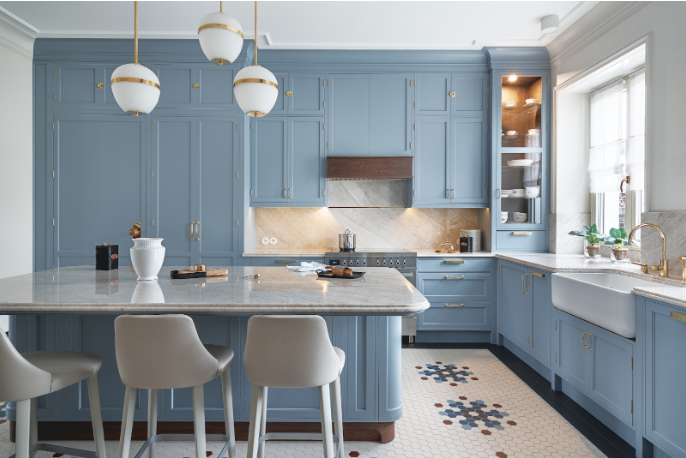
Transitional kitchens bridge traditional and modern. The Shaker recessed panel door is the workhorse of this style. It has enough structure to feel classic, and enough restraint to feel current.
Hardware can mix old and new. Satin nickel bar pulls, polished chrome knobs, or mixed metal combinations all work. The key is intentionality: pick a mix and stick to it.
Color palette: greige, soft white, sage green, dusty blue, and warm gray. These tones are timeless in a way that bold trendy colors aren’t.
D. Farmhouse and Cottage Kitchens
Farmhouse kitchens feel lived-in and welcoming. Beadboard panel doors add texture. Shaker doors with thick rails add weight and presence. Both fit naturally in this style.
Hardware should feel handmade and honest. Matte black bin pulls, wrought iron hinges, vintage cup pulls. Avoid anything that looks too refined or polished.
In Columbus, OH, the Farmhouse kitchen style has stayed popular longer than in coastal markets. It fits the practical, unpretentious character of Midwest home design.
E. Coastal and Scandinavian Kitchens
Both styles share a love of light, airiness, and natural materials. Flat panels and simple beadboard doors work well. Avoid heavy profiles that feel enclosed.
Hardware should be light in finish brushed nickel, soft brass, raw wood pulls. White and natural wood dominate the color story. Blue-gray accents bring in coastal reference without being literal.
Materials Used in Panel Cabinet Doors
A. Solid Wood
Solid wood is the gold standard. It’s real, it’s durable, and it takes stain beautifully. Common species include oak, maple, cherry, hickory, and walnut.
The trade-off is cost and sensitivity to humidity. Wood expands and contracts with seasonal moisture changes. In Ohio’s climate, that’s worth planning for. A good fabricator will account for this in how doors are built and installed.
B. MDF (Medium-Density Fiberboard)
MDF is the most popular choice for painted cabinet doors. It has a smooth, consistent surface — no grain bleed-through, no knots, no inconsistencies. Paint bonds to it cleanly.
The downside: MDF is heavy, and the edges are vulnerable to moisture. A quality paint job and good sealing help. It’s not ideal for kitchens with a lot of steam or humidity near the sink area.
C. Plywood
Plywood is used primarily in cabinet box construction, but also in some door builds. It handles moisture better than MDF and has excellent structural strength. Many custom fabricators use plywood boxes with solid wood door fronts.
D. Thermofoil and Laminate
Thermofoil wraps a vinyl film over an MDF core. It’s cost-effective and easy to clean. Colors are consistent and don’t fade.
The known issue: thermofoil can peel or bubble near heat sources dishwashers, ovens, and even strong sunlight from a kitchen window. It’s not repairable once it peels. Worth knowing before you commit.
E. Wood Veneer
Veneer is a thin layer of real wood bonded over a plywood or MDF core. You get the look and feel of natural wood at a lower price than solid. It’s available in dozens of species and grain patterns.
Veneer doors are a smart middle ground more affordable than solid wood, more authentic than thermofoil.
Finish and Color Considerations
A. Paint vs. Stain
Paint hides the material underneath. It’s the right choice for MDF and maple, which don’t have dramatic grain patterns worth showing. Paint also gives you access to the full color spectrum.
Stain enhances what’s already in the wood. Use it on oak, cherry, hickory, and walnut species where the grain is part of the design story. A clear or light stain on white oak is one of the most popular finishes in kitchens right now.
Two-tone combinations have been popular for years and show no sign of slowing down. Upper cabinets in soft white, lower cabinets in a deeper tone navy, sage, or charcoal. The island often gets its own color treatment as well.
B. Popular Cabinet Finishes Right Now
Matte and eggshell sheens dominate painted cabinets today. They’re fingerprint-forgiving and photograph well. High-gloss had its moment in modern kitchens, but satin and matte have largely replaced it.
Natural wood tones are surging. White oak and warm walnut are particularly strong right now. They bring warmth into kitchens that might otherwise feel cold or sterile.
Glazed finishes where a secondary color is applied and wiped back to settle into grooves and details add depth to raised panel and traditional doors. They’re less common in new builds but still requested in renovation work.
C. How Color Affects Panel Profile Perception
Light colors make panel details softer and more subtle. A white raised panel door reads quieter than the same door in a deep espresso stain.
Dark colors make profiles bolder. The shadows created by the panel geometry become more dramatic. That can be a beautiful effect or too heavy, depending on the kitchen.
When in doubt, order a physical sample door in your shortlisted finishes. Hold it up in your actual kitchen under your actual lighting. It’s the only reliable way to know before committing.
Hardware Pairings That Complete the Look
A. Knobs vs. Pulls vs. Bar Handles
Knobs are traditional. They pair naturally with raised panel and arch panel doors. A 1.25-inch round knob on a raised panel cabinet is a timeless combination.
Cup pulls have a vintage feel and work especially well with beadboard and Shaker doors. They’re functional and add a handcrafted quality to the design.
Bar handles are the modern standard. Long and sleek, they work best on flat panel and Shaker doors. They’re also more ergonomic and easier to grip for people with limited hand mobility.
B. Finish Matching Tips
Your cabinet hardware should coordinate with your faucet and light fixtures. It doesn’t have to be an exact match, but it should belong to the same visual family.
Mixing metals is acceptable and even encouraged now. The rule is to keep it intentional. Two metals not three. Warm and cool metals together can work if the contrast is deliberate.
Matte black hardware is one of the most versatile finishes available. It works with white, navy, sage, and natural wood cabinets. It reads modern without being cold.
C. Sizing Hardware Correctly
Drawer pulls should be roughly one-third the width of the drawer face. A 24-inch drawer looks right with an 8-inch pull. A tiny pull on a large drawer looks unfinished.
Cabinet knobs run 1.25 to 1.5 inches in diameter for standard doors. Larger statement knobs 2 inches or more are trending on oversized pantry doors and islands.
Oversized bar pulls on Shaker and flat panel modern kitchens are very current. They make a bold statement without adding any decorative detail to the door itself.
Cost Considerations by Panel Door Style
A. Budget-Friendly Options
Thermofoil flat panel and Shaker MDF doors are the most affordable entry points. Expect to pay $50–$150 per door for stock or semi-stock options.
Ready-to-assemble (RTA) cabinets offer Shaker doors at competitive prices. Quality varies, so read reviews carefully and request a sample before ordering a full kitchen.
Columbus, OH has several local RTA and stock cabinet suppliers. Getting samples in person before committing saves a lot of frustration.
Understanding the best cabinet options for your budget means knowing what’s negotiable — and door style is often where you can make smart trade-offs without sacrificing the overall look.
B. Mid-Range Options
Semi-custom Shaker or raised panel doors in solid wood or veneer fall in the $150–$350 per door range. Local Columbus fabricators often provide better value than big national brands at this tier.
You get more size flexibility, more finish options, and a better fit for non-standard cabinet dimensions. Worth the extra investment if your kitchen has custom sizing.
C. Premium and Custom Options
Full custom solid wood doors start around $300 and can reach $700 or more per door depending on species, profile complexity, and finish. For a full kitchen, that adds up fast.
Exotic woods, inlay details, leaded glass panels, and specialty hardware all add to the total. Custom shops in the Columbus area can work with you on phasing costs if needed.
D. Budget Tips to Keep Costs Down
Mix your door styles intentionally. Use glass panel doors on two to four upper display cabinets. Keep everything else in a simpler Shaker or flat panel. The visual interest is there without the full premium price.
Refacing is worth considering if your cabinet boxes are structurally sound. Replacing just the doors and drawer fronts can deliver 70–80% of the visual impact of a full remodel for roughly half the cost.
Order a few extra doors when you place your initial order. If one gets damaged in a year or two, matching it later is harder and often more expensive.
Common Mistakes to Avoid When Choosing a Panel Door Style
Choosing a style that doesn’t match your home’s architecture is the most common mistake. A sleek flat panel door looks odd in a 1920s Craftsman bungalow. Context matters.
Ignoring ceiling height is another one. Tall arch panel doors need room to breathe. Low ceilings make them feel compressed and awkward.
Over-detailing a small kitchen is a real risk. Busy profiles and heavy raised panels can visually shrink a space. Simpler door styles open things up.
Always view a physical sample door in your actual kitchen. Showroom lighting is flattering and controlled. Your kitchen has specific light angles, colors, and surfaces that change how a door looks.
Mismatching hardware scale kills an otherwise great design. Tiny knobs on large raised panel doors look like an afterthought. Size your hardware proportionally.
Don’t forget maintenance when choosing glass panel or beadboard doors. Both require more frequent cleaning than smooth flat or Shaker surfaces. Factor that into your decision, especially in busy family kitchens.
And finally don’t chase a trend for a long-term renovation. What’s on design blogs today might feel dated in five years. Classic styles hold their value longer, both visually and in home resale.
Quick Style Comparison at a Glance
Here’s a simple reference to help you compare options side by side:
| Style | Best Kitchen Type | Material Options | Price Range | Maintenance |
| Raised Panel | Traditional | Solid wood, veneer | Mid–High | Medium |
| Shaker/Recessed | All styles | Solid wood, MDF | Budget–Mid | Low |
| Flat Panel | Modern, Minimalist | MDF, thermofoil | Budget–Mid | Low |
| Beadboard | Cottage, Farmhouse | Solid wood, MDF | Budget–Mid | Medium |
| Glass Panel | Traditional, Coastal | Wood frame + glass | Mid–High | High |
| Arch/Cathedral | Traditional, Old World | Solid wood | High | Medium |
Use this as a starting point, not a final verdict. Every kitchen has variables that a chart can’t fully capture.
Frequently Asked Questions
What is the most popular cabinet door style right now?
The Shaker recessed panel door is still the most widely chosen style in the U.S. It’s versatile, timeless, and fits almost every kitchen aesthetic from traditional to modern.
Is Shaker style going out of fashion?
No. Shaker has been popular for decades and shows no signs of fading. It’s a design constant not a trend. What changes are the finishes and hardware used with it.
What panel door style adds the most home resale value?
Neutral, timeless styles perform best at resale. Shaker and simple raised panel doors in white or greige appeal to the widest range of buyers. Bold or highly personalized choices can narrow your buyer pool.
Can I mix different panel door styles in the same kitchen?
Yes, intentionally. A common approach: Shaker perimeter cabinets with glass panel uppers for display. Or beadboard on the island with flat panel everywhere else. The key is that the mix looks deliberate, not accidental.
What’s the best panel door material for a humid kitchen?
Solid wood or plywood-core doors handle humidity better than MDF. In Columbus, OH kitchens with poor ventilation or heavy cooking, this is worth prioritizing. Thermofoil is the worst option near heat and steam sources.
How do I choose between raised panel and recessed panel doors?
Ask yourself how formal you want the kitchen to feel. Raised panel reads more traditional and ornate. Recessed panel reads cleaner and more versatile. If you’re unsure, Shaker is almost always the safer bet for long-term satisfaction.