A normal working day can be transformed into a disaster by fire in just a few minutes. It has the capability of destroying property, halting operations, exposing employees to harm, and leaving a business in a state that suffers losses that cannot be realized for months. This is the reason why fire safety should never be performed as a check-box activity. A proper risk assessment of fire would also assist in recognizing the hazard even before it emerges, and provide businesses with a straightforward direction on how to mitigate the risk sensibly.

Fire risk assessment is the process of evaluating a workplace, building, or commercial property to identify potential fire hazards or factors that could exacerbate a fire. It also verifies the people who know and what preventive measures are in place to provide that care is simple. Minimize the risk of fire and ensure that people can safely exit in the event of a fire.
Most companies do not take fire safety seriously unless they are in factories, warehouses, or other environments that are prone to fire hazards. The fact is that offices, shops, salons, clinics, restaurants, apartments, schools, and communal areas all require attention. Poor housekeeping, electrical faults, overloaded sockets, flammable materials, blocked exits, poor evacuation planning, and weak evacuation planning can be found in virtually any place.
The Real meaning of a Fire Risk Assessment.
Fire risk assessment is not just about identifying a fire extinguisher on the wall or verifying that an alarm is functioning. It involves inspecting the building’s operations, equipment, storage, personnel, and emergency procedures. It asks important questions. What could ignite? What could burn? Who is most vulnerable? What was the rate at which people could exit? Are current controls enough?
This process provides employers, landlords, managers, and duty holders with a realistic understanding of their role in fire safety. They do not have to make assumptions, as they receive a clear picture of risks and an improvement plan. That makes workplaces safer and, in many cases, more organized as well.
The importance of Fire Risk Assessment.
Compliance is not even the tip of the iceberg in terms of the value of a fire risk assessment. No, it generally favors legal and insurance expectations, but its actual significance lies in providing protection. It insures employees, visitors, clients, tenants, equipment, inventory, records, and business continuity.
A business can take action at the earliest when it is aware of its fire risks. This may involve correcting wiring, revising storage procedures, staff training, or designing emergency routes. They are usually easy solutions, but they can save a significant life when every second counts.
It also builds confidence. Such a workplace makes employees feel safe because it does not ignore the issue of fire. When a space is well-managed, customers and visitors are aware of it. In the case of businesses, this instills trust and reduces exposure to avoidable situations.
The Key Areas a Fire Risk Assessment will Examine.
Fire hazards are typically the first point of assessment. They are commonly classified into ignition sources, fuel sources, and oxygen supply. The sources of ignition can include faulty electrical equipment, heaters, cooking appliances, candles, smoking materials, or hot work such as welding. The fuel can be made from paper, cardboard, textiles, furniture, packaging, schematics, or even accumulated waste. Oxygen is a natural element found in the air, but certain systems or materials stored can enhance the severity of a fire.
The third step would be to determine who might be vulnerable. This encompasses the emees, the coctors, the cuers, the rents, as well as the virs. Certain individuals may require additional assistance during an emergency, such as children, elderly persons, individuals with disabilities, or those unfamiliar with the building.
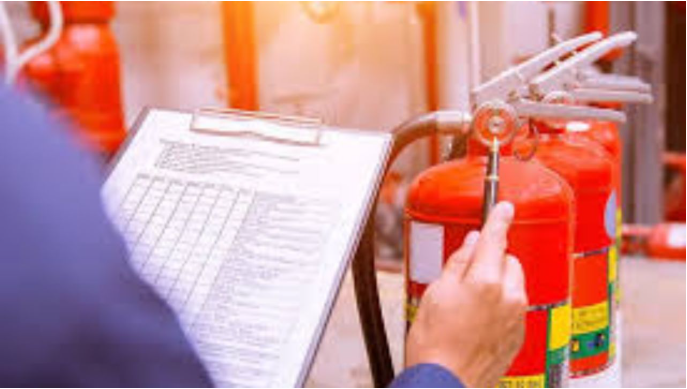
The evaluation of the existing fire safety is then done. This involves alarm systems, emergency lights, escape routes, signs, fire doors, extinguishers, staff training, evacuation plans, and maintenance documentation. If the controls are present but weak, outdated, or poorly maintained, they may not provide effective protection.
Essential Fire Hazards in Businesses.
Electrical equipment remains one of the most common fire-related issues in the workplace. Faulty cables, overloaded extension leads, substandard chargers, and unattended appliances may all pose a risk. Even a simple task, such as leaving equipment running overnight, can cause issues.
Another serious problem is housekeeping. Even a small fire can be brought under control quickly by some waste materials, cardboard boxes, and cluttered storage rooms, as well as blocked corridors. Clutter is also a progressive phenomenon in the workplace, and therefore, it is common in busy workplaces until a person steps back and realizes the danger.
Close attention should also be paid to heat-producing equipment. All kitchen appliances, dryers, boilers, portable heaters, lighting systems, and machinery must be properly installed, maintained, and monitored. Flammable liquids and chemicals, which are more dangerous, must be more controlled in industrial settings.
Human behavior matters too. Some examples of things that people can do every day to compromise safety include poor training, smoking where it should be avoided, propping open fire doors, or storing items near electrical panels.
Who is to conduct a fire risk Assessment?
A fire risk assessment must be conducted by a person capable of making informed judgments about fire risks, building usage, and control measures. A conscientious manager can perform it in simple premises, provided they possess the right knowledge. Many businesses opt to hire a trained fire risk assessor in bigger, more intricate, or more hazardous environments.
Competence is the most important issue. The person conducting the assessment should be capable of detecting hazards, assessing the risk accordingly, and prescribing viable and relevant actions. A quick or shallow evaluation can appear good on paper but will fail at the point of need.
What A Good Fire Risk Assessment Report has.
An effective fire risk assessment report is focused, action-oriented, and precise. It must also describe the building, outline how it will be used, identify the key fire risks, specify the people at risk, list the existing controls, and indicate any deficiencies. It must also note recommended actions in a manner that can move the business forward.
Reports should not be good based on ambiguous words. They highlight whatever is needed. As an illustration, rather than mentioning that the escape routes require inspection, a powerful report would indicate that the back door is partly blocked with stock stored and that this is to be cleared off. Such a detailed report is easier to use.
Frequency of Fire Risk Assessment Review.
A fire risk assessment is not an occasion that a business should overlook or forget. It should be reviewed regularly, particularly in cases where layout, staffing, equipment, process, occupancy, and storage change…. A review should also be precipitated by any fire incident, near miss, or major renovation.
Buildings and working practices change over time, even when it is not evident that anything has changed. New appliances get added. Furniture gets moved. Storage grows. The Band-Aid solutions are made permanent. A periodic audit will identify such changes before they cause latent risk.
Emergency Planning and Fire Risk Assessment.
The assessment can be effective only when it is linked to real emergency planning. That would imply that personnel would be aware of what to do in case of a fire breakout, where to take refuge, how to raise an alarm, and who should be responsible for what is important. There must be escape routes, easily accessible exits, and functioning fire doors.
This involves training, which is a crucial component. The workers are not required to be fire experts, yet they are expected to know the rudimentary processes and feel good enough to react without panicking. Fire drills, short refreshers, and visible signage facilitate this. An empty plan on paper will never be sufficient since nobody will adhere to it when under strain.
Errors that Businesses usually commit.
The error that is easily made is viewing the fire risk assessment as a piece of paper rather than as a working tool for safety. Companies can fill out a form and put it aside, never to locate it again. That defeats the purpose.
The other error is to duplicate generic templates without adapting them to the real-life premises. Every building is different. The risks associated with a salon, warehouse, office, restaurant, and medical clinic differ. An effective evaluation is not some generalized words but an indicator of the actual situation.
Some companies believe the presence of extinguishers and alarms means they are completely insured. These are significant, but they are just one aspect of the picture. Fire prevention, staff awareness, escape planning, maintenance, and housekeeping also play a crucial role.
The role of Fire Risk Assessment in supporting Business Continuity.
A fire also causes more than just physical damage. It can disrupt business, slow down orders, tarnish the image, cause legal headaches, and result in financial losses. The business impact may take a long time to dissipate, even compared to the fire itself.
There can be a correct fire risk assessment that would trim down that exposure. Early detection of problems and enhancement of safety mechanisms help businesses reduce the risk of a significant incident and increase the level of recovery preparedness. It implies decreased disruption, increased resilience, and increased probability of ensuring long-term stability.
Selecting the most appropriate Property Strategy.
The most suitable fire risk assessment is one that corresponds to the size, layout, and use of the premises. A simple review and frequent follow-ups can be required in a small office. The multi-storey business premises, factory units, care facilities, or multi-purpose facilities might require a more specific and expert treatment.
It is not about who is right or wrong, but rather about the relevance and action. An effective evaluation is crucial in helping the concerned individual make informed judgments, identify flaws, and ensure a safe environment in the long term. It must not be confusing or lying in a file.
Conclusion
One of the most significant steps in developing a safer building and a more responsible business is a fire risk assessment. It assists in identifying hazards, safeguarding human beings, enhancing emergency preparation, and minimizing unnecessary losses. Businesses can prevent responding to an incident and be proactive by creating a safer environment for both visitors and employees to operate in. A fire risk assessment is not just a safety document when carried out properly and at regular intervals. It is put to practical use as a preventive measure, a basis for preparedness, and a source of peace of mind.