If your social media feed has suddenly filled up with people walking in painfully slow motion, rolling their feet heel-to-toe like they’re auditioning for a martial arts film, you’ve already met the fitness trend everyone’s talking about in 2026: tai chi walking.

It looks almost too gentle to count as exercise. No sweat, no heavy breathing, no step counter buzzing with achievement. Yet search interest in tai chi walking has exploded over the past year, outpacing nearly every other fitness trend on record. So what’s actually going on here, does the science hold up, and should you be doing it? Let’s break it down.
What Is Tai Chi Walking?
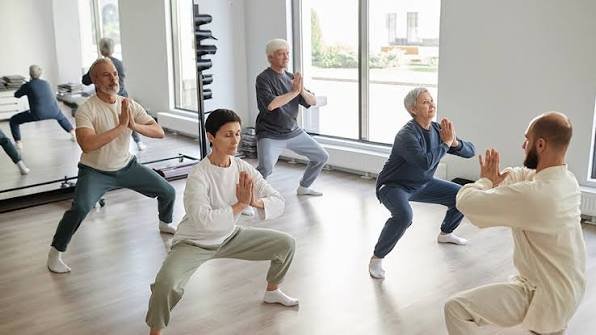
Tai chi walking is a mindful movement technique that blends the slow, deliberate stepping principles of traditional Tai Chi Chuan with everyday walking. Instead of focusing on speed, distance, or calories burned, the practice centres on three things: controlled weight transfer from one leg to the other, upright postural alignment, and breath that’s synced with each step.
Rather than a brand-new invention, tai chi walking is actually a simplified, everyday-friendly version of stepping drills that have existed within Tai Chi Chuan for centuries. Traditionally, these drills were used by martial artists to build stability, sensitivity, and efficient force transfer. Today, the same movement pattern has been repackaged as a standalone practice that anyone can do in a hallway, a park, or an office break room — no equipment, no class, no experience required.
Why Is Tai Chi Walking Trending in 2026?
A few things have converged to push tai chi walking into the mainstream this year:
- Step-count fatigue. The 10,000-steps-a-day benchmark has lost its shine, and people are looking for movement that measures quality over quantity.
- Digital overstimulation. With screen time and notifications at an all-time high, a slow, screen-free practice that calms the nervous system feels like a genuine antidote.
- Low barrier to entry. It requires zero equipment, zero cost, and can be done indoors in under five minutes — a huge advantage over gym-based trends.
- Viral, visual appeal. The distinctive heel-to-toe rolling motion is highly shareable on TikTok and Instagram Reels, which has accelerated awareness far beyond the wellness niche.
Importantly, it’s worth noting that the viral “tai chi walking” format itself hasn’t been independently studied. Most of the scientific backing comes from decades of research into full, structured Tai Chi Chuan training — not the short, casual walking variation currently trending online. That distinction matters when weighing how much benefit you can realistically expect from a five-minute session versus consistent, structured practice.
The Science-Backed Benefits of Tai Chi Walking
1. Better Balance and Fall Prevention
This is where the evidence is strongest. Because each step requires you to briefly balance your full body weight on one leg, tai chi walking trains the small stabilising muscles in the ankles, hips, and core that keep you upright. Research on structured Tai Chi training consistently shows improved balance, posture, and reduced fall risk, particularly in older adults.
2. Lower Stress and Cortisol
Slowing your pace and synchronising it with your breath activates the parasympathetic nervous system — your body’s natural “rest and recover” switch. This shift away from a stressed, fight-or-flight state is one of the most consistently reported benefits among practitioners, and it’s backed by broader research on tai chi’s calming effects on the nervous system.
3. Heart Health and Blood Pressure Support
Walking on its own is already linked to a reduced risk of heart attack, heart failure, and stroke. Layer in tai chi’s documented effects on blood pressure, and regular practitioners may see a meaningful cardiovascular benefit over time — though this depends on consistency, not occasional sessions.
4. Stronger Legs, Core, and Posture
Despite its gentle appearance, the constant controlled weight-shifting engages the core and lower-body stabilisers far more than casual walking does. Over weeks of practice, many people notice improved posture and steadier movement in daily life.
5. Support for Weight Management
Tai chi walking alone won’t torch calories the way running or HIIT does. But as a low-barrier, sustainable habit, it can support long-term weight management by making daily movement more consistent — and consistency, not intensity, is usually the deciding factor in lasting results.
Tai Chi Walking vs Regular Walking vs Full Tai Chi
| Regular Walking | Tai Chi Walking | Full Tai Chi Set | |
| Primary goal | Cardio, distance | Balance, mindfulness | Whole-body coordination |
| Intensity | Low–moderate | Very low | Low–moderate |
| Equipment | Shoes | None | None |
| Best for | Cardiovascular fitness | Stress relief, balance | Comprehensive mind-body training |
| Learning curve | None | Minimal | Moderate to high |
Think of tai chi walking as the accessible entry ramp — it borrows the most beginner-friendly elements of tai chi without requiring you to learn a full choreographed form.
How to Do Tai Chi Walking: Step-by-Step
- Find a quiet stretch of space. A hallway, garden path, or quiet room works fine — you don’t need distance, just a few metres to move back and forth.
- Stand tall. Relax your shoulders, soften your knees slightly, and let your arms hang loose at your sides.
- Shift your weight fully onto one leg. Feel your foot root into the ground before you move the other foot at all.
- Lift the other foot slowly. Roll it forward heel-to-toe, letting the big toe be the last part to touch down.
- Transfer your weight gradually onto the new front foot rather than dropping into it.
- Coordinate your breath. Inhale as you shift your weight, exhale as you complete the step. Let the breath set the pace, not the other way around.
- Repeat slowly, staying aware of your posture, breath, and the sensation in your feet with every step.
Start with just 5–10 minutes a day. Consistency matters far more than duration here.
Who Should Try Tai Chi Walking?
Tai chi walking is especially well suited to:
- Older adults at risk of falling — this is where the research evidence is strongest, though it applies to sustained practice over weeks, not one-off sessions.
- People managing everyday stress or mild anxiety — the nervous-system calming effect is well supported by broader tai chi research.
- Anyone with joint pain or limited mobility — the low-impact nature makes it accessible where higher-intensity workouts aren’t.
- Desk workers — a few minutes after long periods of sitting can help reset posture and re-engage the core.
It’s less suitable as a standalone approach for anyone whose main goal is building serious cardiovascular fitness or significant muscle mass. In those cases, it works best as a complement to strength training or brisk walking, not a replacement for it.
Common Mistakes Beginners Make
- Moving too fast. The benefits come from slowness and control — rushing defeats the purpose.
- Holding the breath. Breath and movement should flow together, not compete.
- Skipping the weight transfer. Simply walking slowly isn’t the same as fully committing your weight to each step.
- Expecting instant results. Like most mindful movement practices, the benefits build gradually with regular practice, not overnight.
- Learning only from short clips. The balance elements in particular are easy to get wrong without proper guidance — a short tai chi class or instructor session can help you nail the fundamentals.
How to Build a Daily Tai Chi Walking Habit
The biggest challenge isn’t learning the technique — it’s remembering to do it again tomorrow. A few tips that make it stick:
- Attach it to an existing habit, such as right after your morning coffee or before your evening shower.
- Start smaller than feels necessary. Five minutes is enough to build the habit loop before you extend the duration.
- Keep it visible. Practising in the same spot each day (a hallway, a corner of a room) removes the friction of deciding where and when.
Frequently Asked Questions
Is tai chi walking good for weight loss? It supports weight management indirectly by building a consistent movement habit, but it burns relatively few calories on its own. Pair it with brisk walking or strength training for direct fat-loss results.
How long should I practise tai chi walking each day? Ten to fifteen minutes daily is a good starting point. Even five minutes, practised consistently, offers noticeable benefits over time.
Is tai chi walking safe for seniors? Yes — it’s one of the groups with the strongest evidence for benefit, particularly for improving balance and reducing fall risk, provided the practice is structured and consistent.
Do I need a teacher to learn tai chi walking? Not necessarily, but working with an instructor — even briefly — helps you get the balance and weight-transfer mechanics right, which are hard to self-correct from videos alone.
Final Thoughts
Tai chi walking isn’t a magic fix, and it won’t replace your cardio or strength sessions. But as a low-cost, joint-friendly practice that measurably supports balance, stress reduction, and heart health, it’s earned its spot as one of 2026’s most talked-about wellness trends for good reason. Start with five slow, mindful minutes today, and let consistency — not intensity — do the rest.