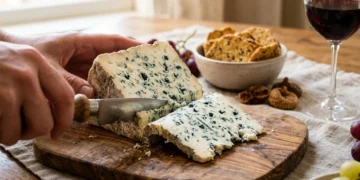
Let me be honest with you the first time someone slid a piece of gorgonzola across a cheese board in my direction, I hesitated.The blue-green veins running through the pale, creamy paste looked a little alarming.The smell was bold, almost sharp, and nothing like the mild cheddar I was used to reaching for. But something made me take the bite anyway.

That one bite changed how I think about cheese entirely.
If you’ve been walking past gorgonzola cheese at the deli counter, or scrolling past recipes that call for it and substituting something safer this is your sign to stop. Today we’re going all in on one of Italy’s most celebrated, most misunderstood and honestly most delicious cheeses.From its origins and flavor to the best ways to cook with it, here’s everything you need to know.
What Exactly Is Gorgonzola?
Gorgonzola is a blue veined Italian cheese with a history that stretches back over a thousand years.It originates from a small town called Gorgonzola, just outside Milan in the Lombardy region of northern Italy though today it’s also produced in the neighboring region of Piedmont.
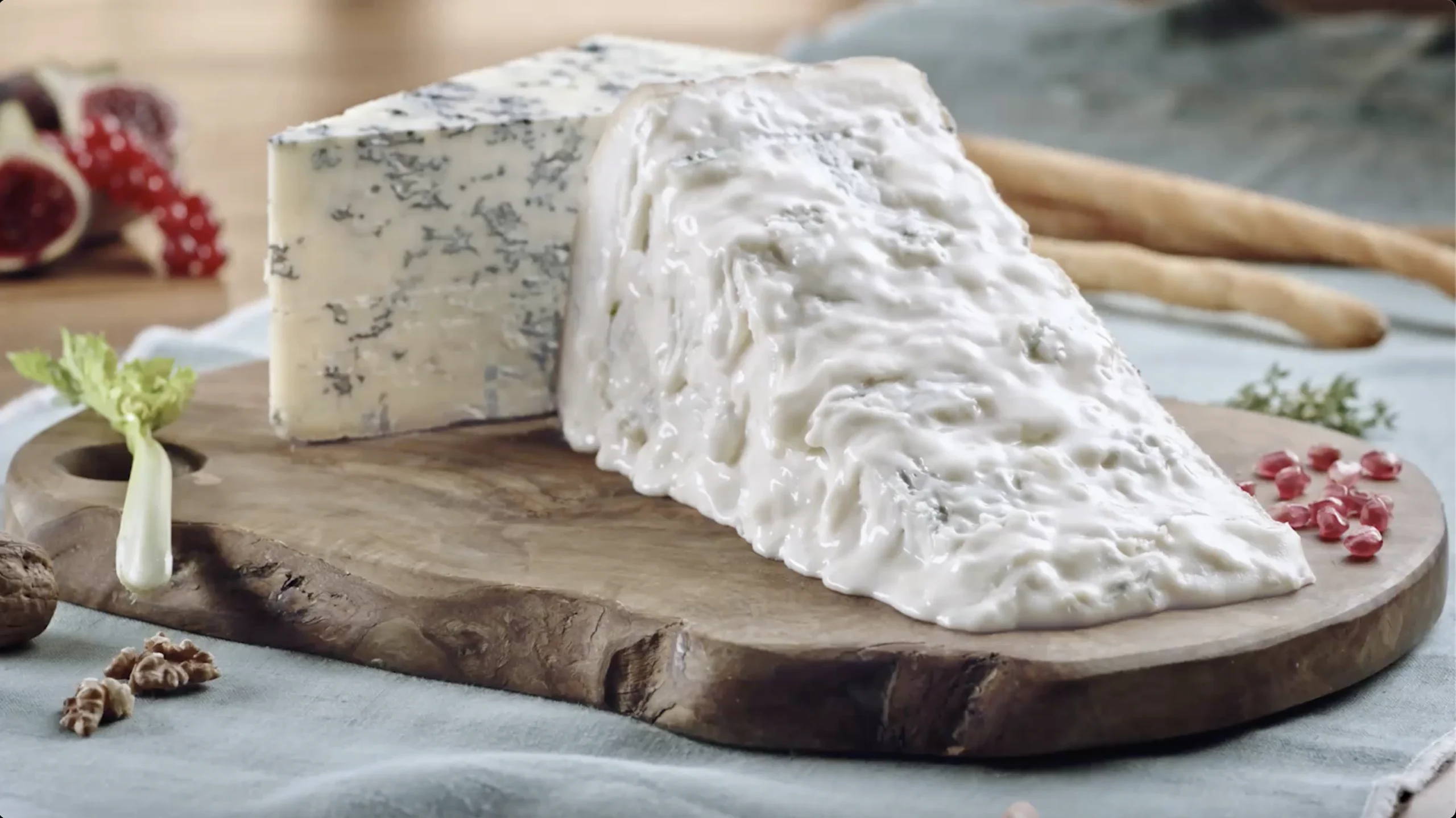
The cheese is made from full-fat pasteurized cow’s milk, and what gives it that instantly recognizable marbled appearance is the introduction of Penicillium glaucum mold during production.Long copper needles are used to pierce the cheese and allow air to flow through, encouraging the mold to grow and creating those distinctive blue-green streaks that run through every slice.
One thing that sets gorgonzola apart from other blue cheeses is its legal protection. It carries a gorgonzola DOP status Denominazione di Origine Protetta,or Protected Designation of Origin.This is the same kind of protection that Parmigiano-Reggiano and Prosciutto di Parma carry. It means that genuine gorgonzola DOP can only be produced in specific Italian regions,using traditional methods and locally sourced milk. If you see that DOP label on the packaging, you’re getting the real thing.
What’s Gorgonzola? A Deeper Look at Its Story
People often ask what’s gorgonzola and the question is more interesting than it might seem, because gorgonzola isn’t just a cheese. It’s a piece of Italian culinary history.
Legend has it that the cheese was discovered accidentally by a cheesemaker in medieval Italy who left some curd out overnight and returned to find it had developed mold. Rather than throwing it away, he aged it and the result was something remarkable. Whether or not the story is entirely true, gorgonzola has been made in the Po Valley for centuries, and today it’s one of the most exported Italian cheeses in the world.
The gorgonzola meaning itself is simply a place name the town of Gorgonzola, which in old Lombard dialects roughly translates to “market of grain.” A humble origin for a cheese that’s become anything but humble on the world stage.
Gorgonzola and Blue Cheese: What’s the Difference?
Let’s clear this up once and for all, because it’s one of the most common points of confusion.
Gorgonzola and blue cheese are related, but they are not the same thing. “Blue cheese” is a broad category that includes any cheese made with cultures of Penicillium mold the thing that creates those characteristic blue or green veins. Gorgonzola blue cheese, Roquefort from France, Stilton from England and Danish Blue are all members of this family.
So when people ask is gorgonzola cheese the same as blue cheese the answer is: gorgonzola is a blue cheese, but not every blue cheese is gorgonzola. It’s a bit like asking if Champagne is the same as sparkling wine. Champagne is sparkling wine, but sparkling wine isn’t always Champagne.
What makes gorgonzola distinct within the blue cheese world is its Italian origin, its DOP protection and particularly its texture and flavor which tends to be creamier, milder, and more buttery than many of its international counterparts. Gorgonzola vs blue cheese in general? Gorgonzola typically wins on creaminess and approachability, especially in its younger form.
Gorgonzola Dolce vs. Piccante: Two Cheeses in One Name
Here’s something that surprises a lot of people: gorgonzola actually comes in two very different styles, and knowing which one you’re working with changes everything.
Gorgonzola Dolce dolce meaning “sweet” in Italian is the younger of the two. It’s aged for just two to three months, which means it stays soft, moist, and incredibly creamy. The flavor is mild, buttery, and gently tangy, without the aggressive punch you might expect from a blue cheese. If you’re new to artisan blue cheese and not sure where to start, gorgonzola dolce is your answer. It spreads like butter, melts into sauces effortlessly, and won’t overwhelm your palate.
Gorgonzola Piccante is a completely different experience. Aged for six months or longer, it becomes firmer, more crumbly, and dramatically more intense in flavor. The blue veining is more pronounced, the aroma is stronger, and the taste is complex sharp, earthy, nutty, and deeply savory with a long finish. This is the version that serious cheese lovers seek out, and the one that tends to steal the show on a well-curated cheese board.
What Does Gorgonzola Cheese Taste Like?
This is probably the question I get asked most by people who are curious but cautious. What does gorgonzola cheese taste like, really?
The honest answer is: it depends on which style you’re eating. But across both varieties, you can expect a cheese that is rich and fatty on the base, with a distinctive tanginess and a savory, umami depth that’s hard to find in milder cheeses. There’s an earthiness to it sometimes described as mushroomy or cave-like that comes from the mold. And there’s a slight sharpness that lingers on the tongue.
Gorgonzola dolce leans sweeter, almost milky, with the blue flavor playing a supporting role rather than dominating. Gorgonzola piccante is bold and uncompromising the kind of cheese that makes you pause and think about what you’re tasting.
Neither is better than the other. They just belong in different moments.
Cooking With Gorgonzola: Where It Truly Shines
This is where things get exciting. Gorgonzola is one of the most versatile cooking cheeses you’ll ever work with. It melts beautifully, adds depth to simple dishes, and has a way of making everything around it taste more interesting. Here’s how to actually use it:
Gorgonzola Sauce and Gorgonzola Cream Sauce
If there’s one recipe that converts skeptics into believers, it’s gorgonzola cream sauce. The method couldn’t be simpler: melt gorgonzola into warm heavy cream with a little butter, season with salt and pepper, and let it reduce until it coats a spoon. What you end up with is a gorgonzola sauce that’s silky, deeply savory, and rich without being heavy.
This sauce is incredible over steak especially a medium-rare ribeye or tenderloin. It works just as well spooned over roasted cauliflower, grilled polenta, or used as the base for…
Gorgonzola Pasta
Gorgonzola pasta is weeknight dinner perfection. Toss your favorite pasta — rigatoni, pappardelle, tagliatelle into that gorgonzola cream sauce, maybe add some toasted walnuts and a handful of wilted spinach, and you have a restaurant-quality meal in under twenty minutes. A little freshly cracked black pepper and a shaving of Parmigiano on top, and it’s done.
The classic pairing of gorgonzola with pear or fig works beautifully here too — slice some ripe pear into the pasta and let the sweetness balance the sharpness of the cheese. It sounds unusual. It tastes extraordinary.
Gorgonzola Gnocchi
Gorgonzola gnocchi is one of those dishes that sounds complicated and is actually completely effortless. Use store-bought gnocchi if you want no shame in that. Cook them until they float, drain, and toss straight into your warm gorgonzola cream sauce. The pillowy dumplings soak up the sauce and become something genuinely special. Add crispy pancetta on top if you want to take it even further.
Gorgonzola Pizza
Gorgonzola pizza might be the most underrated thing on this entire list. Most people think of pizza as a mozzarella situation, and they’re not wrong but gorgonzola does something completely different. It melts into creamy pockets across the pie, adding a sharp, funky richness that pairs beautifully with sweet toppings.
The classic combination: gorgonzola, caramelized onions, thinly sliced pear, and a drizzle of honey after baking. Or try it with walnuts and arugula, tossed on fresh after the pizza comes out of the oven. Either way, you’ll be making it again the following week.
Pairing Gorgonzola: Drinks, Fruits, and Beyond
Great cheese deserves great company. Here’s what works best alongside gorgonzola:
Honey: a drizzle of good wildflower or chestnut honey over gorgonzola is one of those combinations that sounds too simple to be transcendent. It isn’t. The sweetness softens the sharpness and brings out the creaminess in a way that’s hard to describe and easy to love.
Walnuts and hazelnuts: the earthy bitterness of walnuts mirrors the earthiness of the cheese without competing with it. Together they taste like something that’s always belonged on the same plate.
Fresh figs and pears: fruit and gorgonzola is a pairing that’s been working for centuries across Italy. The natural sugars in the fruit create contrast, and the acidity balances the fat.
Riesling: if you’re wondering how is Riesling pronounced, it’s REEZ-ling. And a good off-dry German or Alsatian Riesling is one of the finest matches for gorgonzola you’ll ever find. The slight residual sweetness in the wine, combined with its bright acidity, cuts right through the richness of the cheese and refreshes the palate between bites. Wine pairing can sometimes feel overcomplicated, but this one is genuinely as good as the sommeliers say.
Bold reds: if wine isn’t your thing, a good Amarone, Barolo, or even a rich Primitivo from southern Italy can hold its own against gorgonzola piccante without being overwhelmed.
Gorgonzola on the Cheese Board
If you’re building a cheese board, gorgonzola earns its place every time. As an artisan blue cheese with centuries of tradition behind it, it adds both visual drama and flavor depth to any spread.
Pair it with a mild, creamy cheese like burrata or fresh mozzarella to give guests a contrast. Add a aged hard cheese like Pecorino or Grana Padano for texture. Then let gorgonzola be the bold centerpiece — surrounded by honey, walnuts, dried figs, sliced pear, and good crusty bread or crackers.
The blue cheese drawing of the mold through each slice makes it one of the most visually striking cheeses you can put on a board. It looks impressive. It tastes even better.
Why Gorgonzola Is Worth the Adventure
Here’s what I’ve come to believe after years of eating and cooking with gorgonzola: the cheeses that make us hesitate are often the ones that reward us most.
It’s easy to reach for something safe and familiar. It’s a little braver to try a blue veined Italian cheese with a thousand-year history and a flavor profile that can’t quite be replicated anywhere else in the world. But once you do once you melt gorgonzola into a cream sauce for the first time, or take that first bite of gorgonzola dolce with a drizzle of honey you’ll understand why Italians have been making it the same way for centuries.
Whether you’re making gorgonzola pasta on a Tuesday night, building a stunning cheese board for a dinner party, or just picking up a wedge at the deli counter to eat with a glass of Riesling on a quiet evening gorgonzola is one of those ingredients that makes ordinary moments feel a little more special.
Don’t walk past it next time. Pick it up. Take it home. Give it a chance.