

Planes turn back all the time, honestly. Most of those flights never make the news. But united airlines flight ua82 was different it declared an emergency not long after leaving Newark, and within hours people were talking about it everywhere, from flight-tracking forums to random Twitter threads full of nervous flyers. If you’ve landed here looking into the united airlines flight ua82 emergency, wondering what actually went down and whether it’s something to worry about next time you book this route here’s the whole thing, laid out honestly.

A Normal Night Flight, Right Up Until It Wasn’t
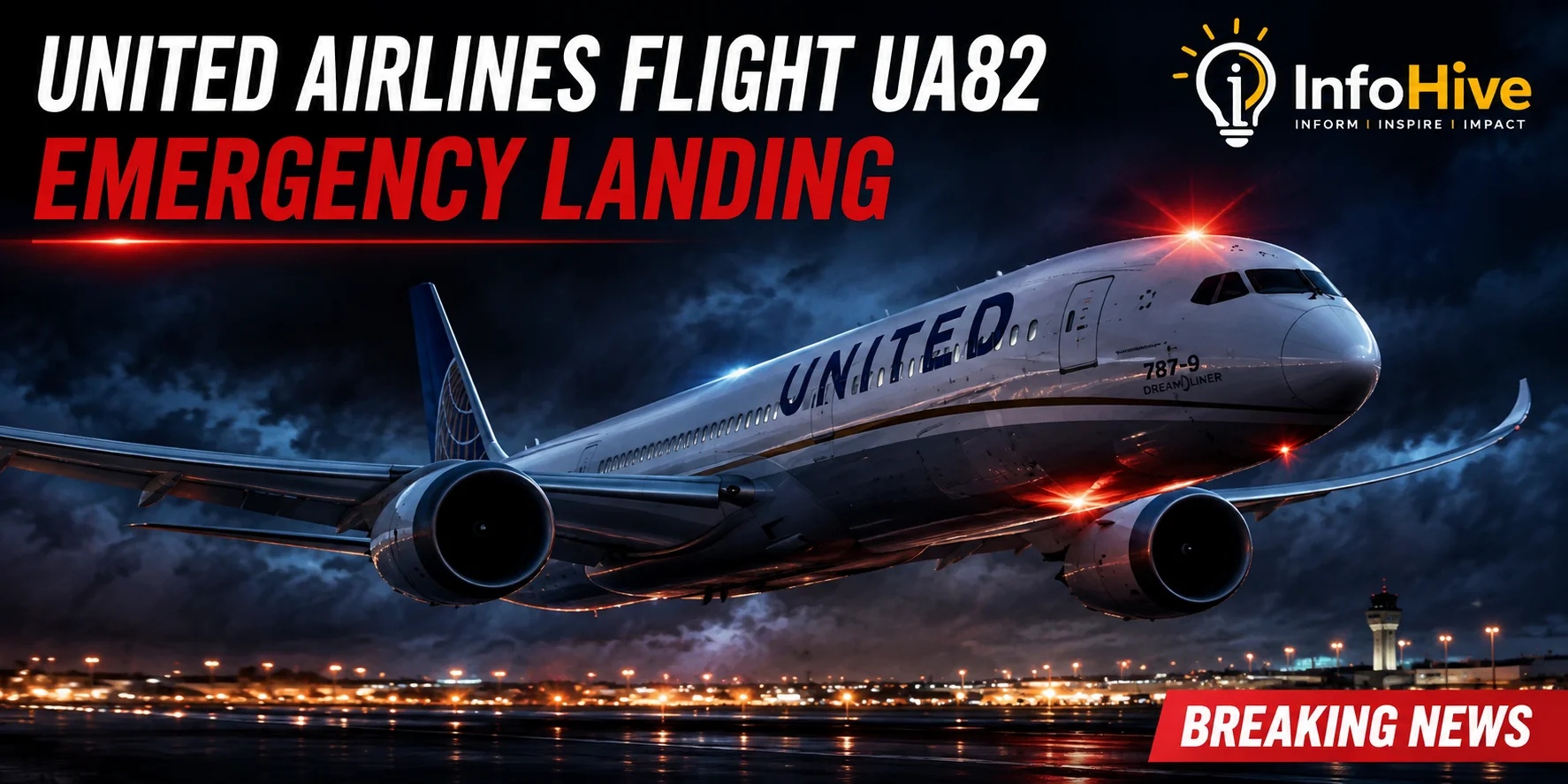
It was July 7, 2025. The flight pushed back from Newark Liberty International Airport a little after 9:30 p.m., same as it usually does. Same aircraft type too a Boeing 787-9 Dreamliner, the workhorse United uses on this particular route to Indira Gandhi International Airport in Delhi. Nothing about the takeoff gave anyone reason to think twice.
For about 45 minutes, things went exactly the way you’d expect. Climb, level off near 33,000 feet, settle into what should’ve been a long, unremarkable haul across the Atlantic. Half the cabin was probably already asleep by then. Nobody had any reason to suspect otherwise.
Then that changed. An automated warning came through in the cockpit, flagging something wasn’t right. And that’s basically where the whole ua82 emergency landing story starts.
So What Actually Broke
The fault traced back to the aircraft’s electronics cooling system not exactly a headline-grabbing name, but it matters more than it sounds. This system is what keeps the plane’s avionics and electronic equipment from overheating, and on a 787, that equipment is running a lot: navigation, flight computers, the works. So when something flags an issue there, especially right before heading out over open ocean for hours, pilots don’t just wait and see.
The crew ran through their emergency checklist and made the call to turn back while they still had that option. That’s also when they squawked 7700 the code every pilot knows means “this is serious, treat us as priority.” The second that code went out, air traffic control started clearing a path home.
Turning Back Toward Newark
united airlines flight ua82 cut its climb short and banked around somewhere near the Gulf of Maine, based on flight-tracking data then pointed itself straight back at Newark. Controllers kept the flight prioritized the entire way down, which is standard once that 7700 code is active.
The descent itself went smoothly. No drama, no complications. The plane held its emergency squawk the whole way and touched down safely at Newark around 11:15 p.m. about two hours after it had first taken off. Emergency vehicles were staged near the runway, just as a precaution, which is routine whenever a flight declares an emergency. They weren’t needed. No smoke, no visible damage, nothing that suggested things had gotten worse than a technical fault.
ALSO READ
United Airlines Flight UA770: Alarming Incident Every Flyer Should Know
Nobody Got Hurt — But It Was a Long Night for a Lot of People
Here’s the part that matters most, honestly: everyone walked off that plane fine. No injuries, no chaos on the tarmac, nothing close to what some of the online reactions made it sound like.
What it was, though, was a genuinely rough night for around 250 passengers and crew. A lot of them had connections booked, weddings to attend, work meetings waiting on the other side. Instead of landing in Delhi as planned, they were stuck back in New Jersey, watching their original aircraft get wheeled off for inspection.
United put people up in hotels, handed out meal vouchers, and worked through rebooking pretty standard response for a diversion like this. Still, some travelers didn’t make it to Delhi until a full day later than they’d planned, which on a route this long isn’t a small inconvenience.
Why the Plane Didn’t Fly Again Right Away
The aircraft involved, tail number N23983, had been flying for United since it rolled out of the factory back in 2020 young, as wide-bodies go. Once it was back at the gate, maintenance crews got straight to work trying to figure out exactly why the cooling system had failed.
The FAA typically keeps tabs on investigations like this too, particularly for wide-bodies on long international routes, since something like this needs to be tracked in case it shows up again elsewhere in the fleet. In the days that followed, the aircraft stayed grounded for checks, though United didn’t make any changes to its regular Newark–Delhi schedule because of it.
This Wasn’t Really a One-Off
Look back a bit, and UA82 isn’t the only United flight that’s turned around mid-air this way. Earlier in 2025, flight UA1321 made a similar precautionary return to Newark after an unspecified mechanical issue. Go back further, to March 2024, and there’s UA830 a Sydney to San Francisco flight which declared an emergency and returned to Sydney after the crew suspected a hydraulic problem.
None of that should really be alarming, though. If anything, it says something good about how these aircraft work. Modern planes are loaded with sensors built to catch even small deviations long before they turn into real problems, and pilots are trained to play it safe every single time something looks off. A cooling alert, an odd pressure reading it doesn’t mean the plane’s in trouble. It means the systems built to catch trouble early are doing exactly what they’re supposed to.
Anyone checking on united airlines flight ua82 today will find the route running normally, which says a lot about how contained this whole situation actually turned out to be.
Why Turning Back Was the Right Move
It’s worth explaining why a 7700 squawk triggers such a fast, coordinated response, because from the outside it can look more alarming than it really is. The moment a pilot enters that code, the flight lights up differently on every controller’s screen tracking it. From there, air traffic control starts clearing a path rerouting other aircraft if needed, offering a more direct descent, or holding runway access at the destination.
For united airlines flight ua82, still fairly close to Newark when the fault came up, that meant the crew had a real choice: turn back now, instead of pushing on toward hours of open ocean with almost nowhere to land in between. That’s basically the logic behind these calls in the cockpit. When something tied to the aircraft’s electronics throws a warning, heading back to a nearby airport almost always beats continuing on and hoping it sorts itself out somewhere over the Atlantic.
Ground crews and emergency teams get put on standby every time, too even when, like this time, nothing ends up going wrong. That layered readiness, honestly, is a big reason flying long distance stays one of the safest ways to travel, even when a headline like “emergency landing” makes it sound otherwise.
What Travelers Should Actually Take From This
If you fly long-haul routes often, there are a couple of real takeaways buried in the united airlines flight ua82 emergency.
For one a declared emergency doesn’t automatically mean something dangerous was happening. Pilots declare early on purpose, so help’s already lined up if things do get worse, even though most of the time, they don’t.
For another, airlines already have processes ready for situations exactly like this. Rebooking, hotels, meal support none of it undoes a disrupted trip, but it does mean passengers aren’t left to figure things out completely on their own.
And finally, faults like the one behind the ua82 cooling system issue get caught early precisely because these aircraft are watched so closely throughout the flight. The system flagged the problem, the crew acted immediately, and the whole thing was handled before it ever had a real chance to turn into something worse.
ALSO READ
Delta Flight DL275 diverted LAX – What Happened Mid-Flight and Why It Matters
Wrapping It Up
At the end of the day, united airlines flight ua82 is a story about the safety net doing exactly what it’s built to do. A fault showed up mid-flight, the crew followed procedure, air traffic control cleared the way, and the plane landed safely with everyone on board okay. The actual cost here wasn’t safety it was time. Passengers lost a day, United dealt with the fallout, and the aircraft went in for inspection.
For anyone researching united airlines emergency landing newark incidents, or just curious how safe long-haul Dreamliner routes really are, this one’s a fair example of the system working the way it’s meant to: catch the problem early, respond fast, and get everyone down safely even if that means turning around a few hours short of where you were actually headed.
FAQs
1. What caused the United Airlines Flight UA82 emergency?
The united airlines flight ua82 emergency was caused by a fault in the aircraft’s electronics cooling system, which is responsible for keeping the plane’s avionics and electronic equipment at safe operating temperatures. The crew received an automated alert about the issue roughly 45 minutes into the flight and decided to return to Newark rather than continue toward the Atlantic crossing.
2. Was anyone injured during the UA82 emergency landing?
No. The ua82 emergency landing ended safely, with all passengers and crew disembarking without any injuries. The aircraft landed smoothly at Newark with no reported fire, smoke, or structural damage.
3. Why did the pilots declare a 7700 emergency instead of just continuing the flight?
Since the aircraft was still relatively close to Newark when the cooling system fault appeared, and the next leg involved hours of flying over open ocean, the crew decided it was safer to turn back immediately rather than risk the issue worsening mid-crossing. Squawking 7700 gave the flight priority handling from air traffic control for a fast, safe return.
4. Is United Airlines Flight UA82 still operating normally?
Yes. Anyone checking on united airlines flight ua82 today will find that United has continued operating this Newark–Delhi route on its regular schedule. The specific aircraft involved was taken out of service temporarily for inspection, but the route itself was not affected long-term.
5. What happened to passengers after the emergency landing?
United Airlines arranged hotel stays, meal support, and rebooking assistance for the roughly 250 passengers and crew affected. While no one was hurt, some travelers ended up reaching Delhi about a day later than originally scheduled due to the disruption.
ALSO READ
Flight 5201 Emergency RDU: What Really Happened on the American Eagle Flight